The 5G Network Backbone: A Guide to Small Cell Technology
March 12, 2026
Estimated reading time: 7 minutes
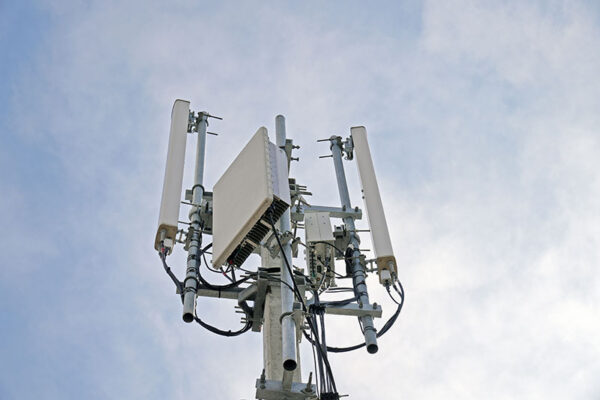
As 5G moves from early deployment to wide adoption, major U.S. telecom providers will use small cells. They will use them to expand 5G coverage. What does this mean?
Small cells use low-power, short-range base stations. They complement the macro layer by adding capacity and improving spectral efficiency. This technology extends and densifies coverage in areas where macro sites alone cannot maintain the required:
They cover small geographical areas or small-proximity indoor and outdoor spaces.
Small cells have the same characteristics as the base stations telecom companies have used for years. They support high data rates for mobile broadband and consumer apps. They also support dense networks of low-speed, low-power IoT devices.
These capabilities make them pivotal for 5G cell planning to deliver:
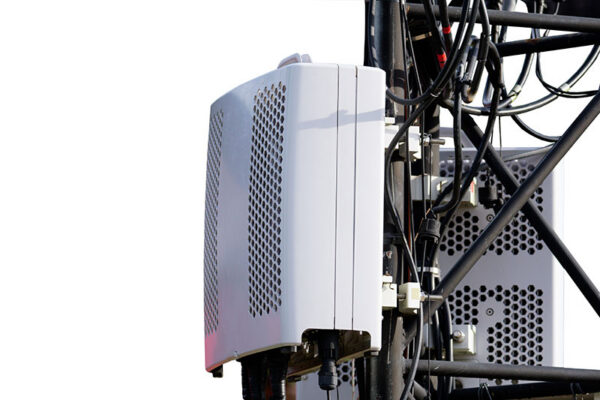
According to RF Page, small cells improve the leveraging of multiple-input, multiple-output (MIMO) and beamforming. They also support operations across high-capacity midband and millimeter wave (mmWave) spectrum.
These features allow operators and enterprises to deploy capacity where macro sites cannot reach. This is particularly important for indoor environments, which generate over 70% of mobile traffic.
These small cell transceivers can be mounted to the wall for indoor usage. For outdoor coverage, small towers and lamp posts are used. Backhaul connections are less complicated than before and are usually fiber, wired or microwave.
3GPP Releases (Rels) 17 and 18 enhance integrated access and backhaul (IAB) for mmWave technology. Instead of fiber or other means, ultrahigh-speed mmWave signals connect cell sites’ backhaul directly over a cellular connection.
This method requires line of sight between the transceivers. However, it saves capital and operating expenses because no new fiber is installed.
Since the early 2020s, Open Radio Access Network (Open RAN) has played a key role in shaping small cell transceivers. Open RAN provides greater flexibility in network architecture. It splits the work between radio and distribution units to improve interoperability and reduce costs. Open RAN also plays a key role in 5G network evolution. It allows small cell deployments for high-density coverage and capacity.
There are three types of small cells in the industry today:
Each type is distinguished by its coverage capability and the number of users it can support.
Network cell planners and engineers sometimes consider femtocells a separate class. Their cost, purpose and installation processes differ from those of other small cells, which are more like traditional macrocells. Femtocells are for DIY users and IT technicians. They install quickly at home or in a business, like a Wi-Fi access point.
| MACROCELLS | SMALL CELLS | FEMTOCELLS | |
| Average Size | 50-200 feet tall | Pizza box size (18 x 18 inches) | Paperback book size (5 x 8 inches) |
| Average Coverage Range | A few miles | 100 yards (football field) | A home or small business |
| Average Cost to Install | $200,000 | Under $10,000 | $100 |
| Deployment | Between 250,000 and 275,000 in the U.S. | Five to 10 times more than macrocells once fully deployed in the U.S. | Anyone can purchase for their home or small business |

Femtocells are small mobile base stations that help extend coverage for residential and enterprise-level applications. These are mainly used to offload network traffic when networks become congested. Femtocells can expand coverage and enhance building penetration for indoor consumers.
Femtocell Features:

Picocells are small cellular base stations that cover small indoor areas, such as buildings or aircraft. They are great for small enterprises, providing extended network coverage and high data throughput. Applications include:
Picocell Features:
The microcell is a cell in a mobile network served up by a low-power base station that covers limited areas, such as:
Microcells are generally more substantial than picocells, though the distinction is not always clear. The microcell can support more users in distinct geographic areas.
Microcell Features:

5G supports two fundamentally different traffic models: massive machine-type communications (mMTC) and enhanced mobile broadband (eMBB). mMTC (also called massive IoT) includes millions of low-power, low-throughput sensors. These sensors need wide-area coverage and high connection density.
In contrast, applications that demand high capacity, low latency and fall under eMBB or URLLC categories include:
Small cells improve both areas by adding more connections for massive IoT. They also add capacity and improve service quality for mobile broadband.
Small cells play critical but different roles for:
5G is necessary for new, advanced technologies that will be internet-, AI- and sensor-enabled. Companies and organizations will have to rethink or update antiquated IoT strategies.

5G is a significant improvement in mobile broadband capabilities. Ongoing C-band spectrum deployments are core to this rollout.
C-band closed the gap between sub-6 and mmWave. New small cells supporting the C-band are now deployed to enhance coverage and capacity.
Early 5G announcements emphasized mmWave trials and limited hotspot deployments. However, most large‑scale NSA rollouts by leading MNOs relied primarily on midband and sub‑6 GHz spectrum. This approach was favored over deploying mmWave small cells.
As C‑band spectrum became available, operators accelerated the deployment of C‑band‑enabled small cells. These small cells offer a far better balance of coverage, capacity and deployment cost than mmWave.
With the C-band spectrum expanding for 5G, small cells will continue to be used more in private 5G networks. Demand for network slicing and stand-alone (SA) 5G networks for new use cases and enterprises will fuel the push for more dedicated small cells.
Axon Enterprise Inc. and a leading MNO showcased a public safety use case involving network slicing. They sustained performance levels for mission-critical functions while sending video data over a network slice in a commercial 5G environment.
Another notable instance of network slicing was during the Las Vegas Grand Prix. Race car driver Lando Norris live-streamed an HD video tour of his garage. He used a 5G mobile device and a network slice from a leading MNO.
Telit Cinterion is the global leader in IoT enablement. Our enterprise-grade IoT modules, connectivity services and platforms help businesses leverage IoT to drive their digital transformation.
We are an active participant in the 5G ecosystem, constantly introducing new 5G products. We provide device-side expertise for manufacturers and mobile infrastructure operators.
Speak with our IoT experts today for your 5G data card sample.
Editor’s note: This blog was originally published on 12 March 2020 and has since been updated.