Lone Worker Body Cameras: IoT Safety in the Field
April 30, 2026
Estimated reading time: 9 minutes
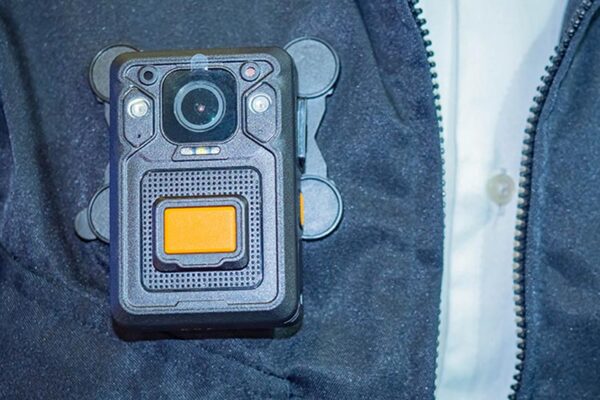
Internet of Things (IoT)-enabled body cameras support lone worker safety by linking video capture to real-time context. When integrated with secure platforms, these systems can speed incident response. They improve documentation and extend operational visibility beyond the worksite.
Lone worker roles are common in utilities and field services, as well as in home healthcare. When an emergency occurs, delayed assistance and unreliable communication can slow response time and worsen outcomes.
Incidents involving lone workers can be harder to detect and assess in real time. Organizations are turning to connected technology to improve safety outcomes. Berg Insight forecasts that the North American lone worker safety solution market will grow from 580,000 users in 2024 to 795,000 by 2029.
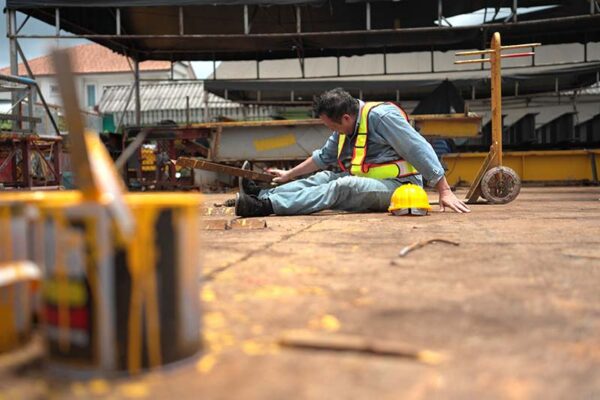
Lone workers face elevated risks; their emergencies often occur out of sight and without immediate assistance available. Research from the National Safety Council (NSC) shows that working alone increases both the likelihood of incidents and the severity of outcomes when something goes wrong.
Nearly 70 percent of organizations reported at least one lone‑worker safety incident within a three‑year period. One in five of those cases was classified as severe. This finding highlights the need for improved monitoring and faster response methods.
Lone workers encounter safety challenges that can escalate quickly without nearby support, including:
Body-worn cameras (BWCs) used by lone workers can stream live video and audio to supervisors. Real-time visibility enables faster decision-making and shortens emergency response times.
Recorded video and audio provide objective documentation of situations involving lone workers. These records help organizations refine safety procedures and increase workplace safety. They also validate workers’ reports and reveal patterns associated with recurring high-risk scenarios or training gaps.
Body cameras may also act as a deterrent. A visible recording device can help reduce the likelihood that contentious encounters escalate to physical violence.

Connected body cameras are most effective when deployed as part of an IoT-based lone worker safety platform. These platforms often include:
When integrated with alerts or SOS triggers, body cameras automatically start recording during emergencies, capturing context that might otherwise be lost.
Some systems also support two-way audio. Lone workers can communicate directly with supervisors or monitoring centers, hands-free. This capability is particularly important when workers are under stress or unable to safely use a phone.
Body camera solutions for lone worker monitoring must capture incidents and support escalation under constrained conditions. Their design must account for limited power and inconsistent cellular connections.
Design choices in these five areas determine whether a connected camera can deliver usable context during an incident:
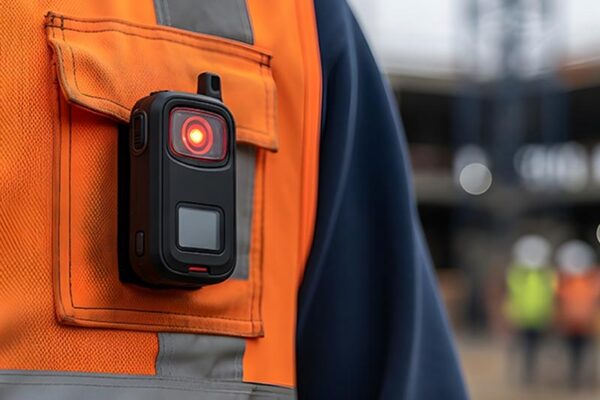
The cellular module is essential for live streaming and alert delivery. It also supports device management across the deployment. Module choice depends on the volume of video required to transmit in real time versus the amount buffered for later upload.
That requirement leads directly to a design tradeoff between throughput and power. Higher-throughput LTE options can support sustained video, but they have higher power demands.
Cellular low-power wide-area (LPWA) network modules address the opposite end of the design space. They prioritize energy efficiency when the workflow relies on lightweight data exchange.
Cellular LPWA modules help body cameras remain operational during long shifts. Some LTE-M and narrowband IoT (NB-IoT) variants support 3GPP Release (Rel) 14 features like Power Saving Mode (PSM) and extended Discontinuous Reception (eDRX).
These features reduce average power consumption. They allow the module to sleep for extended periods and wake up on a schedule to exchange small amounts of data.
Design notes that directly impact lone worker solutions:
Location context is essential for lone worker response. Dispatch decisions depend on real-time coordinates, making GNSS performance a safety feature rather than just a convenience.
Some compact GNSS modules support multi-constellation positioning and can track up to four constellations by default. This improves fix reliability when visibility is limited by urban canyons or partial sky views.
Assistance features also affect time to first fix. Some GNSS modules support Assisted GNSS (A-GNSS) in both autonomous and server-based modes. A-GNSS helps devices acquire a fix more quickly after a cold start.
Timing outputs enable system synchronization in designs that combine sensors, video and event logs. Some GNSS modules offer a precise 1 pulse per second (1PPS) output. This signal synchronizes device clocks to ensure consistent timestamps across recordings and logs.
Design notes that directly impact lone worker solutions:
Lone worker safety devices often operate across various regions. Coverage gaps can occur suddenly. A connectivity approach that supports resilient roaming reduces the risk of losing service during a critical event.
A multiprofile eSIM contains multiple profiles on a single physical SIM. This design facilitates automatic switching to the best profile without needing multiple SIM cards. It offers an alternative to dual-SIM failover systems.
Remote subscription management enables profile updates over the air, reducing the need for physical SIM access throughout the device lifecycle. It also simplifies deployment strategies for devices intended for global distribution with a single SKU.
Design notes that directly impact lone worker solutions:

Edge intelligence helps lone worker camera solutions remain effective when connectivity is unreliable. It shortens response time by detecting specific events locally and triggering escalation without waiting for a cloud round trip.
On-device processing highlights important moments, enabling faster review during emergencies. It creates lightweight metadata so a monitoring team can understand what happened before the full video upload finishes.
Some designs run parts of the application on the cellular module or an embedded processor. This reduces dependence on the main host and supports smaller device sizes. It also increases resilience when the host is busy with video encoding or UI tasks.
Connectivity management can also operate at the edge. A device capable of maintaining sessions and recovering from brief drops is more likely to deliver alerts and uploads under real-world conditions.
Design notes that directly impact lone worker solutions:

Cloud integration determines how quickly safety teams access video and telemetry after an event and how reliably fleets manage and audit devices.
Cloud IoT platform models support data orchestration and event stream processing with analytics. These capabilities allow incident data to flow into operational workflows with less custom integration.
Device lifecycle functions should be treated as safety features in lone worker solutions. Some cloud stacks support firmware updates and device management functions that scale across large fleets. This reduces exposure windows when security patches are required.
Design notes that directly impact lone worker solutions:
Together, these elements transform body cameras from simple recording devices into lifelines for lone workers. Even so, organizations and individuals may have privacy concerns about adopting this technology. For connected safety solutions, device designers should adopt a security by design approach. This strategy integrates security controls throughout the design and development process.
Body camera technology continues to advance, and IoT is a major driver of that progress. Expanded 5G coverage and satellite connectivity are likely to improve performance in remote locations. Biometric real-time monitoring may help detect fatigue or sudden medical events earlier.
Augmented reality (AR) could deliver visual guidance during complex tasks. Predictive safety analytics aim to identify elevated risk conditions before incidents occur.
The long-term goal is a zero-incident workplace. In this model, connected systems do more than respond to emergencies. They help reduce the likelihood that routine work turns into a crisis.
Lone worker body cameras depend on connectivity that holds up in real-world conditions. Coverage can be inconsistent, and power budgets are tight. Device teams need building blocks that support secure operation at scale.
Telit Cinterion supports device designers with purpose‑built cellular modules and global connectivity services built for IoT deployments. These technologies help maintain communication and location awareness when conditions are unreliable.
This approach supports a more resilient body camera platform, especially when safety workflows depend on timely data and reliable escalation. Device teams can focus on product design while relying on proven IoT infrastructure to support secure operation at scale.