Smarter Security and Surveillance with Edge AI and IoT
September 30, 2025
Estimated reading time: 4 minutes

Security and surveillance teams face mounting challenges to stay ahead of rising threats due to:
Manual systems often lack the capacity to process and respond to growing volumes of data. This makes it harder to stay ahead of emerging threats. As safety concerns increase and critical resources remain stretched, organizations are turning to technology for scalable, intelligent solutions.
In this landscape, the Internet of Things (IoT) and edge artificial intelligence (AI) are gaining momentum. These technologies transform how systems detect and respond to potential threats, delivering smarter, more autonomous protection.
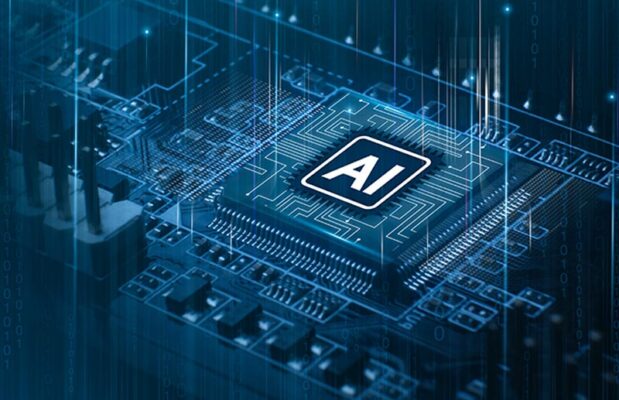
Edge AI enables AI algorithms to run locally, at the point where data is generated. Large volumes of data do not need to be transmitted to the cloud. A facial recognition camera using AI and machine learning (ML) algorithms processes data on-site, rather than on a remote server.
In traditional alarm systems, the intelligence was centralized in the panel. Edge devices connected to the system use short-range technologies like Bluetooth® wireless technology, Wi-Fi or proprietary protocols like Z-wave®. Data processing and decision-making occurred at the hub, with edge devices serving primarily as input sources.
Today, advancements in edge AI shift intelligence to the edge devices themselves. They provide faster, localized analysis and reduce reliance on centralized systems.
This evolution presents new opportunities for faster, more informed decision-making, but it also introduces challenges. Edge devices may lack the processing power for complex AI tasks. Users must decide between local computation and cloud-based processing.
Rapid threat assessment is critical when property and lives are at risk. Edge AI enables faster, more cost-effective data processing.
Traditional security panels must decipher data from multiple sensors and locations. Edge computing filters out “noise” by analyzing data directly at the source. This streamlines the process, allowing for faster and more accurate threat detection.
In the past, commercial environments relied on human oversight to monitor and assess threats. Managing large surveillance systems with multiple cameras and live streams was often challenging for operators. Even early automated systems struggled with accuracy, triggering false alarms that wasted resources and could result in fines.
Edge AI addresses these limitations. Devices analyze data in real time, distinguishing genuine threats from harmless activity. Sensors can instantly recognize a passing animal or moving tree branch by comparing it to a library of known images.
This localized processing reduces false alarms and improves reliability. As these systems continue to learn and refine their image libraries, alerts become more accurate, ensuring notifications are triggered only by qualified threats.
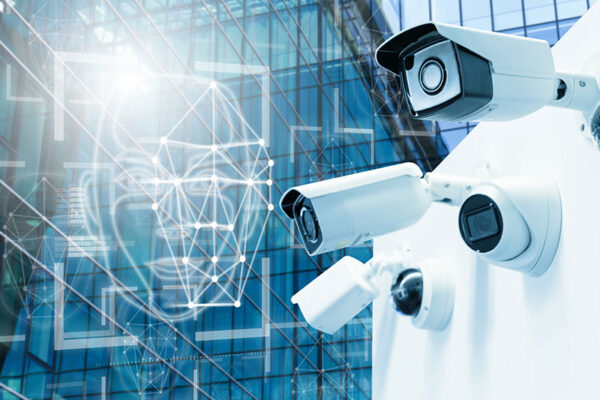
Edge AI plays a crucial role in enabling rapid, intelligent threat detection, especially when property and lives are at risk. By processing data locally, it delivers faster response times and reduces reliance on centralized systems.
A business concerned about a hostile former employee might deploy facial recognition cameras as part of its smart security and surveillance strategy. To support identification, the company uploads 2D and 3D images of the individual to a reference database.
These cameras, trained to identify specific people and filter out irrelevant activity, continuously monitor the premises. If the system detects the employee, edge AI enables real-time recognition and immediate alerting of law enforcement.
Edge AI also boosts home security by filtering out irrelevant data to identify potential threats. It can discern between the family cat and a person lurking outside. It can also learn household routines, such as knowing the living room is usually empty after 2 a.m., and detect irregularities.
Advanced audio recognition can distinguish between different types of glass-breaking sounds, like a dropped cup versus a shattered window. This helps the system identify whether the event is a harmless accident or a potential security threat.
Telit Cinterion is a leader in IoT innovation, offering a robust portfolio of AI-enhanced products. Our solutions enable seamless data transfer from edge devices to business applications, an essential capability for modern security systems.
As a trusted partner for edge-to-cloud connectivity, Telit Cinterion supports every layer of your IoT ecosystem, from devices and data to cloud services and platforms.
Accelerate your next IoT project with Telit Cinterion to build a scalable security and surveillance solution with confidence.